Trial Holes & Potholing Services
Accurately locating buried utilities before construction begins.
Why trial holes matter
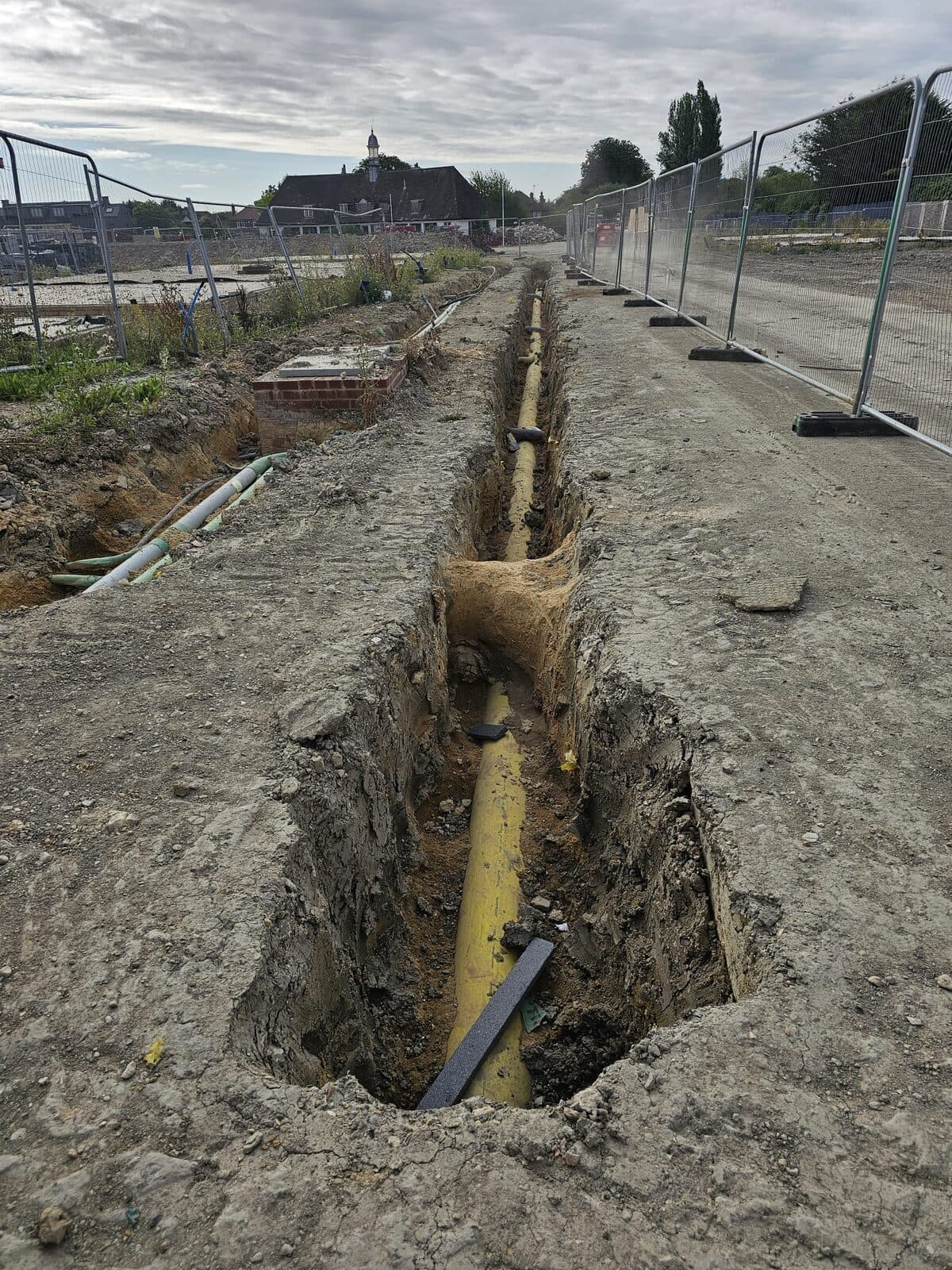
One incorrect utility drawing can cause delays, redesigns, stand-down costs and service strikes. Trial holes provide physical evidence of exactly what's underground before excavation starts - so your team plans and digs from fact, not assumption.
Common uses
Utility Surveys
Confirm depth and location of buried services.
Pre-Construction Works
Remove uncertainty before excavation.
PAS 128 Verification
Ground-truth utility survey data.
Highway Schemes
Reduce risk before breaking ground.
Typical services exposed
- Electric
- Gas
- Water
- Telecoms
- Fibre
- Drainage
Example use case
A contractor preparing for fibre installation needed to verify multiple utility crossings before excavation. Using vacuum excavation and potholing techniques, service depths were confirmed safely, allowing installation works to proceed without delays or utility damage.
Need trial holes before your next dig?
Send us the scope, location and dates and we'll come straight back with availability and a price. You'll speak to the operator - no call centres, no subcontractors.
SSIP Registered - SMAS Worksafe Contractor
Accredited for health and safety in construction procurement.

Frequently asked questions
- What is the difference between a trial hole and a pothole?
- They're closely related. A pothole is a small, targeted excavation to confirm a single service's position and depth. A trial hole is usually a slightly larger inspection pit used to investigate ground conditions or several services at once. Both are dug the same safe way with vacuum excavation.
- How long does it take to dig a trial hole with vacuum excavation?
- A straightforward pothole to a shallow service can take well under an hour once we're set up. Deeper or wider trial holes, hard ground or restricted access take longer. Where you need several across a site we work through them efficiently in a single visit - tell us how many and we'll estimate timings.
- Are trial holes required for PAS 128 surveys?
- Physical verification is what moves a survey up to the highest PAS 128 quality levels. Detection surveys locate services; a trial hole or pothole proves them by exposing the asset, giving you documented, verified positions and depths to design and dig against.
- Can you pothole in highways?
- Yes. Potholing is common on carriageways and verges, where the small footprint keeps traffic management and reinstatement to a minimum and the non-destructive method reduces the risk around the dense services under a road.