Vacuum Excavation for Utility Contractors
Safe, non-destructive digging around live gas, electric, water and telecoms infrastructure.
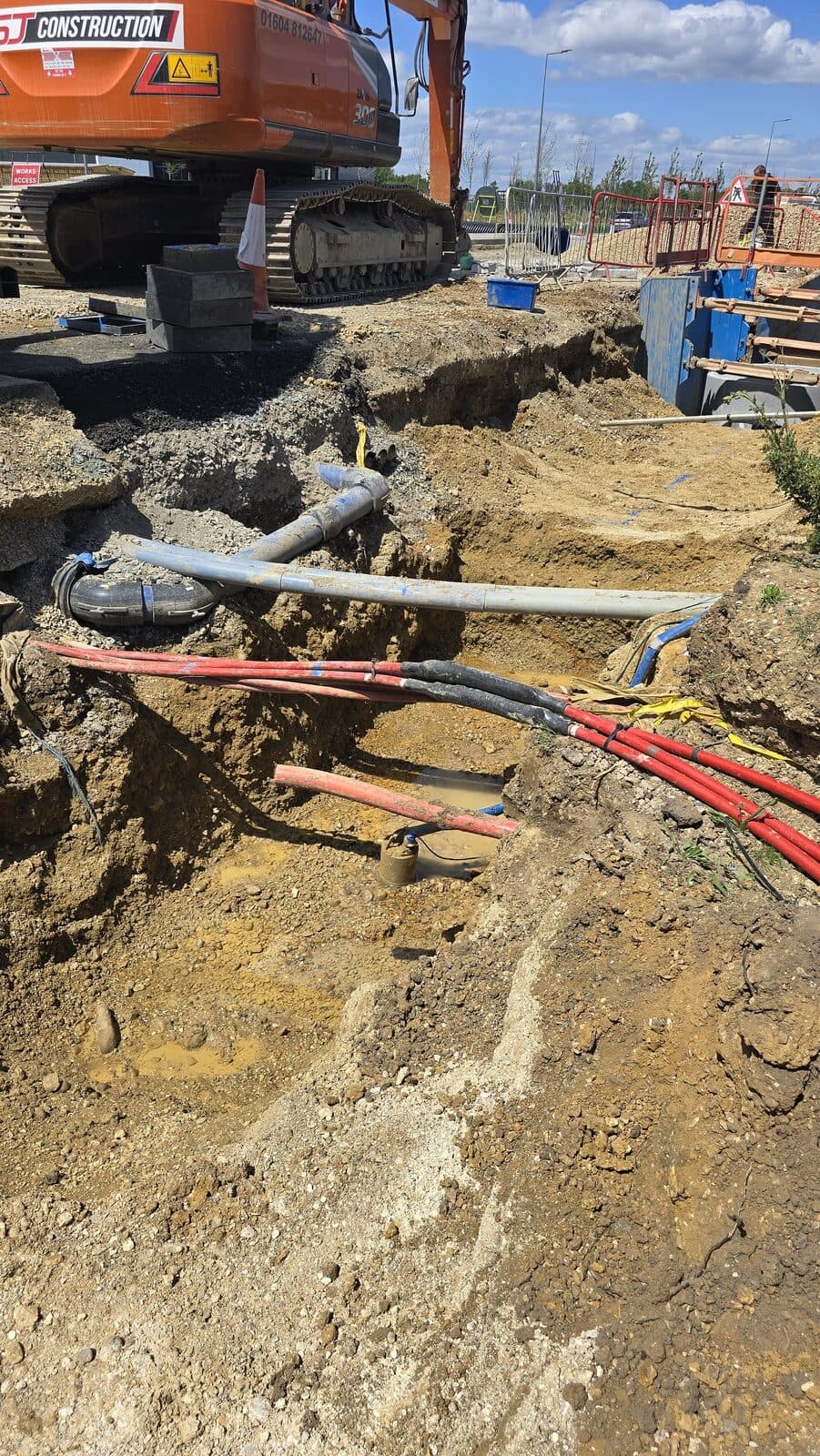
Utility networks are unforgiving. Gas, electricity, water and telecoms assets sit close together, often unmarked or wrongly recorded, and a single strike can mean an explosion risk, a loss of supply to thousands of customers, a RIDDOR-reportable incident and an HSE investigation. For utility companies and the contractors working on their behalf, non-destructive digging isn't a nice-to-have - it's the safe way to get near live apparatus.
Mechanical excavation puts a hard steel edge into ground you can't see into. Vacuum excavation removes that risk entirely: air lances and suction break up and lift spoil without cutting, so operators can work right up to a live cable or main and expose it undamaged. That's why it's the method recommended under HSG47 for working around buried services, and why it underpins compliant permit-to-dig procedures.
Utility work we support
Service connections
Exposing mains and laying in new gas, electric, water and fibre connections without risking the existing network.
Repairs & maintenance
Clearing ground around a damaged main or cable so your jointing and repair teams can work safely and fast.
Diversions
Precise exposure of apparatus ahead of a diversion, keeping supply protected while the route is changed.
Reinforcement & upgrades
Digging joint bays and access pits for network reinforcement and capacity upgrades across the grid.
Services we expose and prove
- Gas mains
- LV & HV cables
- Water mains
- Telecoms & fibre ducts
- Street lighting supplies
- Multi-utility trenches
Different jobs, different requirements
No two utility jobs are the same. Exposing a live gas main for a repair is about protecting a pressurised asset and controlling the surrounding ground; locating a run of telecoms ducts for a fibre rollout is about accuracy and pace across the network; digging joint bays for cable reinforcement calls for clean, well-formed excavations your jointers can work in. We match the method - excavation size, spoil handling and speed - to the asset and the task, and back it with cable and pipe location so the work is led by evidence, not assumption. The result is fewer strikes, safer sites and programmes that stay on track. See our utility exposure and utility verification services for detail.
Utility works that need safe digging?
Send us the scope, location and dates and we'll come straight back with availability and a price. You'll speak to the operator - no call centres, no subcontractors.
SSIP Registered - SMAS Worksafe Contractor
Accredited for health and safety in construction procurement.

Frequently asked questions
- Is vacuum excavation safe around live gas and electric services?
- Yes - that's exactly what it's for. Because nothing mechanical cuts into the ground, suction excavation removes the impact risk that causes strikes on live apparatus. It's the recommended method under HSG47 for working close to buried services, and it protects your operatives, the network and your safety record.
- Do you follow permit-to-dig and safe-digging procedures?
- We work to HSG47 safe-digging practice and fit around your permit-to-dig system, using cable and pipe location alongside excavation so the dig is evidence-led. We can expose and prove positions before any team commits to the ground.
- Can you expose a live gas main ready for a repair crew?
- Routinely. We clear around the main carefully, leave it intact and clean, and hand over a safe, open excavation so your jointers or fitters can get straight to the repair - then reinstate afterwards.
- How is a fibre duct job different from exposing a gas main?
- They need different care. Exposing a live gas main is about protecting a pressurised asset and managing the surrounding ground; locating telecoms ducts for a fibre rollout is about accuracy and speed across a run of the network. We adjust the method - spoil handling, excavation size and pace - to suit each.